
not!key.studio, a French independent video game studio
Who is behind not!key.studio ?
My name is Alex, and I'm almost entirely self-taught. I spent two years studying 3D animation, then worked for three years in web marketing before launching my own business two years ago, where I developed a successful hiking site as well as various client projects. Driven by curiosity and a desire to explore new creative fields, I decided to pursue video game development, a medium that has always fascinated me. Most of what I know today, especially on a technical level, comes from passion, experimentation, and a constant need to learn independently.
Why video games in particular? Because I think they are the richest media, Both artistically and technically, it's a field that has always appealed to me, and which isn't actually that far removed from web development. Creating a game means shaping a strong artistic direction, animating expressive characters, writing a captivating story, designing intuitive interfaces, building engaging gameplay systems, structuring a complex project, implementing it technically, creating soundscapes, managing communication, marketing, and much more…
In short, a multitude of fascinating skills brought together within a medium that I am deeply passionate about.
What can we expect from the studio?
You can expect carefully designed games, exacting standards and a genuine love for the medium. My favorite studios and games have always been those where the developers' passion clearly shines through:
- The Ori and No Rest for the Wicked series by Moon Studios
- The Hollow Knight series by Team Cherry
- Celeste by Extremely OK Games
- Death's Door by Acid Nerve
- Hades I & II by Supergiant Games
- Little Nightmares I & II by Tarsier Studios
- Red Dead Redemption 2 by Rockstar Games
- Clair Obscur: Expedition 33 by Sandfall Interactive
- Divinity: Original Sin I & II and Baldur's Gate III by Larian Studios
- The Last of Us part I & II by Naughty Dog
I also grew up with classics that shaped my tastes and creativity: the first generations of Pokémon, Final Fantasy Tactics, Dofus, Skyrim, and of course, Minecraft. These are the games that made me fall in love with video games.
So, not!key.studio will focus on a very small number of games, prioritizing quality over quantity, as I've always done in everything I create. A part of each of these experiences, inspirations, and memories will naturally find its place in the studio's future projects.
What is your first project?
Name : The Reaping Company
Description : The game is a 2D platformer blending mechanics of action RPG and Metroidvania, centered on narrative depth and the freedom given to the player to experiment with reality, where every action has lasting consequences. The player embodies a recently deceased soul, recruited for eternity as a reaper within The Reaping Company, a vast bureaucratic corporation governing death itself. However, a critical anomaly occurs: the protagonist awakens in a spectral form, retaining their memories as well as the ability to interact with the world of the living, which should not be possible.
Refusing to accept his own death, the player exploits reaper contracts allowing the time travel across multiple eras in an attempt to undo the fatal event. Through missions taking place at different points in history, the player subtly (or recklessly) alters the course of past events, while struggling to preserve a stable present. Every action generates alternative realities, forcing the player to navigate between diverging timelines through failure, experimentation, and discovery, in search of a viable temporal outcome.

The Ghost
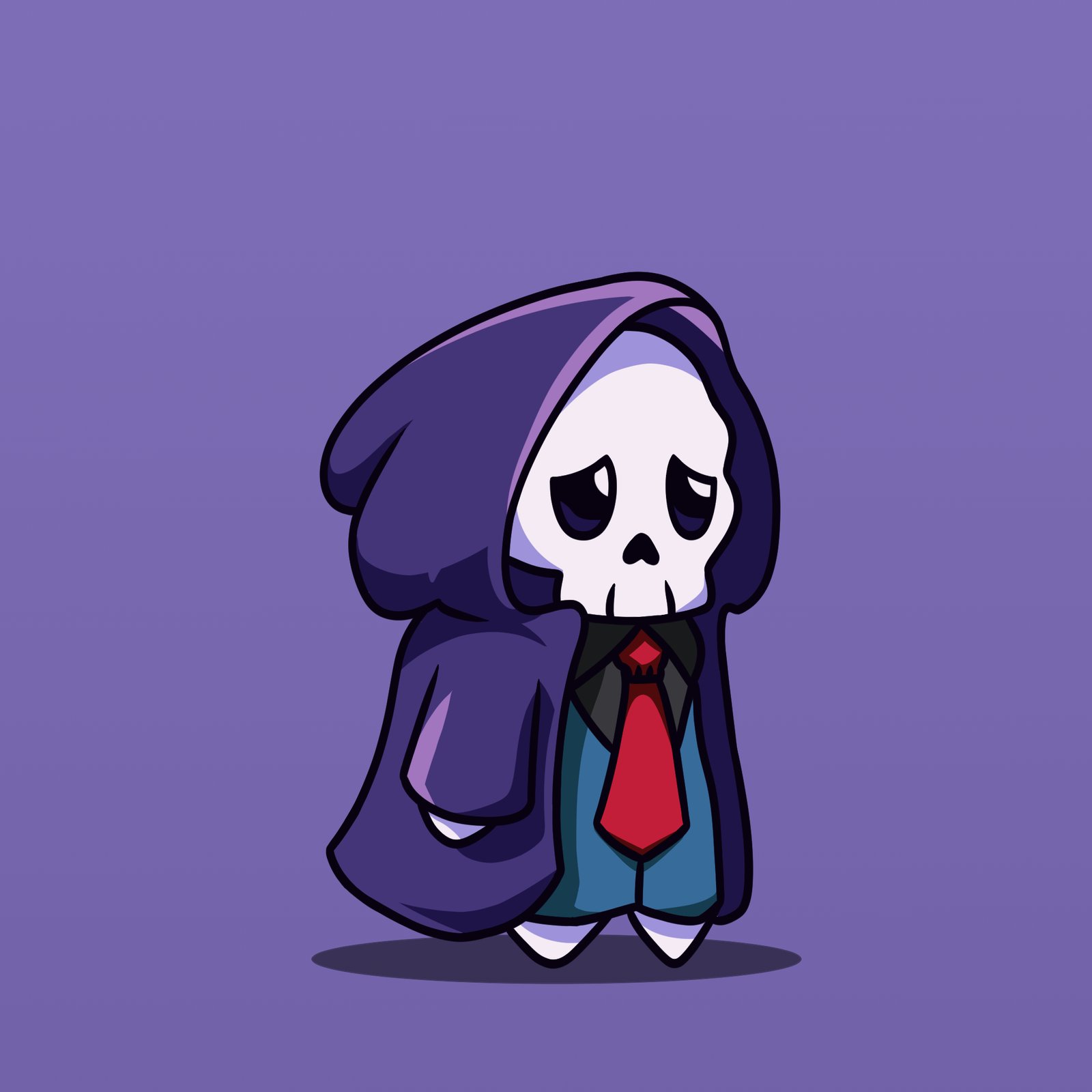
The Reaper
The game emphasizes meaningful narrative choices, responsive dialogue, and carefully staged contract scenes, in which spectral abilities manipulate the physical world Objects, environments, and characters react dynamically to the player's actions. These powers evolve progressively throughout the adventure, allowing for increasingly deeper and more tangible interactions with the world of the living. Each new ability unlocks new forms of alteration, capable of reshaping events and giving rise to new branches of alternate realities. Combat abilities also develop in parallel, evolving according to the player's playstyle and tactical choices. Constantly hunted by hostile enemies, the player must find a balance between combat mastery, contract objectives, and temporal integrity, all while challenging an organization that exists outside of time itself.
Current state of development: Very early stages of development.
Will you be providing regular updates?
Yes, or at least I'll try my best without it slowing down the development itself. I publish monthly devlogs to share the game's progress: what I'm working on, what's evolving, and the challenges encountered along the way. Alongside these devlogs, you'll also find... tutorials on video game development, This includes things I've encountered that I think are worth sharing. There will also be timelapses of asset creation, more in-depth analyses of specific techniques, and some behind-the-scenes glimpses of interesting parts of the process.
All these articles will satisfy your curiosity about how a game is designed, or even give you some advice if you are developing your own project.
The latest devlogs
Devlog 1 | January 2026 - First steps for The Reaping company !
Devlog 1 marks the beginning of The Reaping Company's development. This first month was devoted to laying solid foundations: defining the narrative framework, choosing an artistic direction, creating the first pixel art characters, designing...
The latest game development tutorials
Choosing the right rendering resolution for a pixel art game
Choosing the right rendering resolution is one of the most important decisions when creating a pixel art game. It has a direct impact on visual clarity, sprite readability, scaling behavior, and the overall appearance of the game.
Implementing low-resolution pixel-perfect rendering with a smooth camera in Godot
Implementing pixel-perfect rendering with a smooth camera in Godot 4.6 proved to be much more complex than expected. This article details the actual problems I encountered during production (image ghosting, jittering, frame rate issues, etc.).
Feel free to add this site to your favorites (it will evolve rapidly) and to follow at least one social network of your choice.